Understanding aquatic environments to better protect them
Aquariums that are members of the Union of Aquarium Curators are key players in environmental education in France. Their mission is not limited to exhibiting species: they make scientific knowledge related to aquatic environments accessible and actively participate in public awareness.
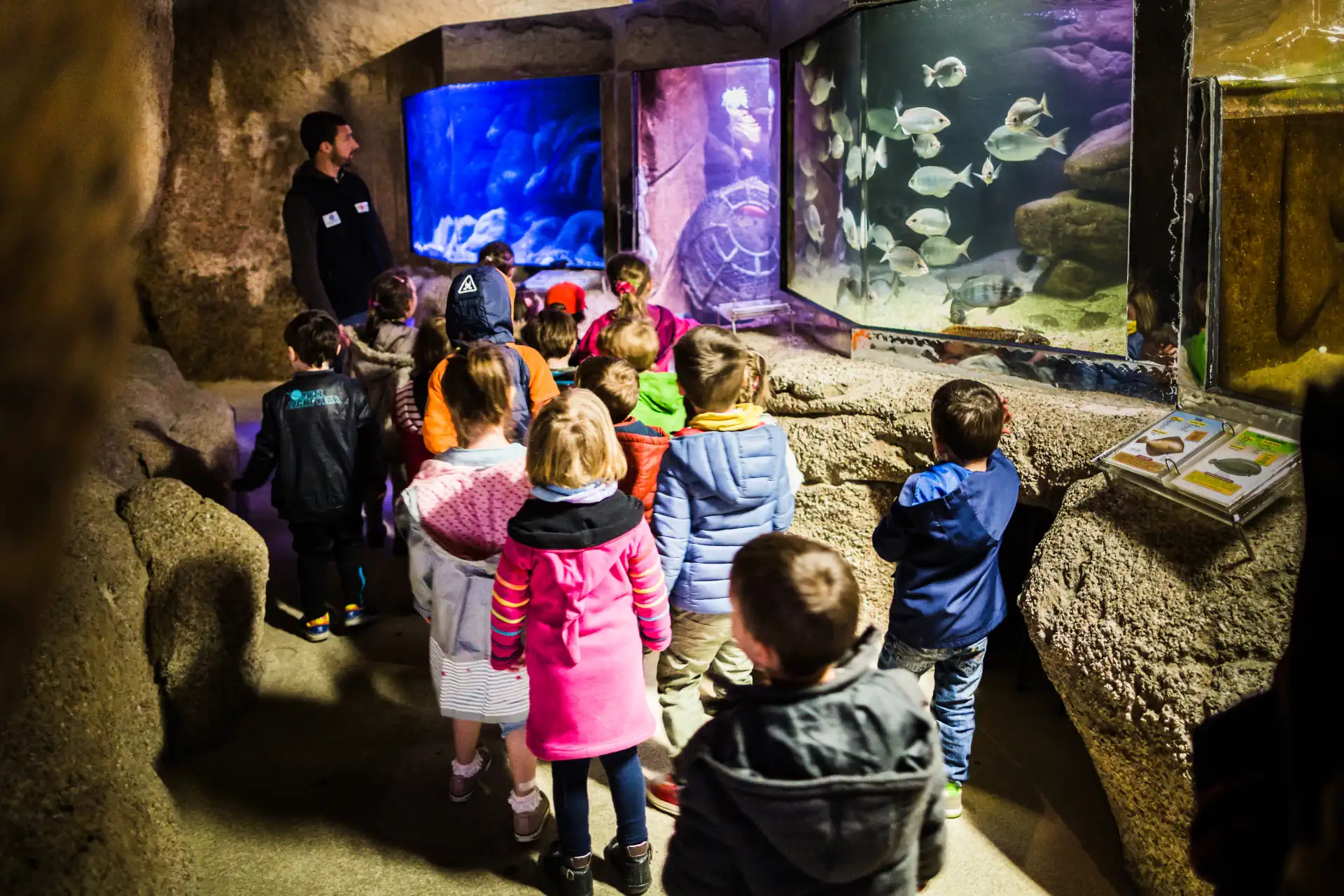
Through a variety of educational tools, guided tours, thematic workshops, interactive materials, and immersive experiences, aquariums help decipher the complex balances of aquatic ecosystems. Visitors discover the interactions between species, biological cycles, and the pressures exerted by human activities.
This educational approach is based on experiential learning. Direct observation of living organisms, in conditions close to their natural environment, is a powerful learning lever. It promotes a concrete and lasting understanding of environmental issues.
The content offered is designed in conjunction with educational programs and scientific benchmarks. This rigor guarantees the quality of the information disseminated and its adaptation to different audiences.
Aquariums thus become places of transmission, where scientific knowledge serves to foster collective awareness.

Educational tools adapted for all audiences
Aquariums develop diverse educational offerings, designed to meet the expectations of various audiences. Schools, students, families, professionals, or communities: each target group benefits from content adapted to their level of knowledge and their specific needs.
Educational programs for schools are part of a complementary approach to teaching. They provide concrete illustrations of concepts covered in class, while promoting interdisciplinarity between science, geography, and education for sustainable development.
For the general public, aquariums offer accessible and engaging formats. Immersive installations, digital tools, and human mediation help enhance the visitor experience and facilitate the appropriation of messages.
Educational teams play a central role in this process. They ensure active mediation, encourage exchange, and constantly adapt content to scientific and societal developments.